
Polyurethane injections
Leaks sealed from inside the crack, without demolition.
We inject polyurethane resin into wet cracks, joints and penetrations in basements, slabs and tanks. Mostly after-sales work on buildings: the problem is localised and must be solved without redoing the whole waterproofing.
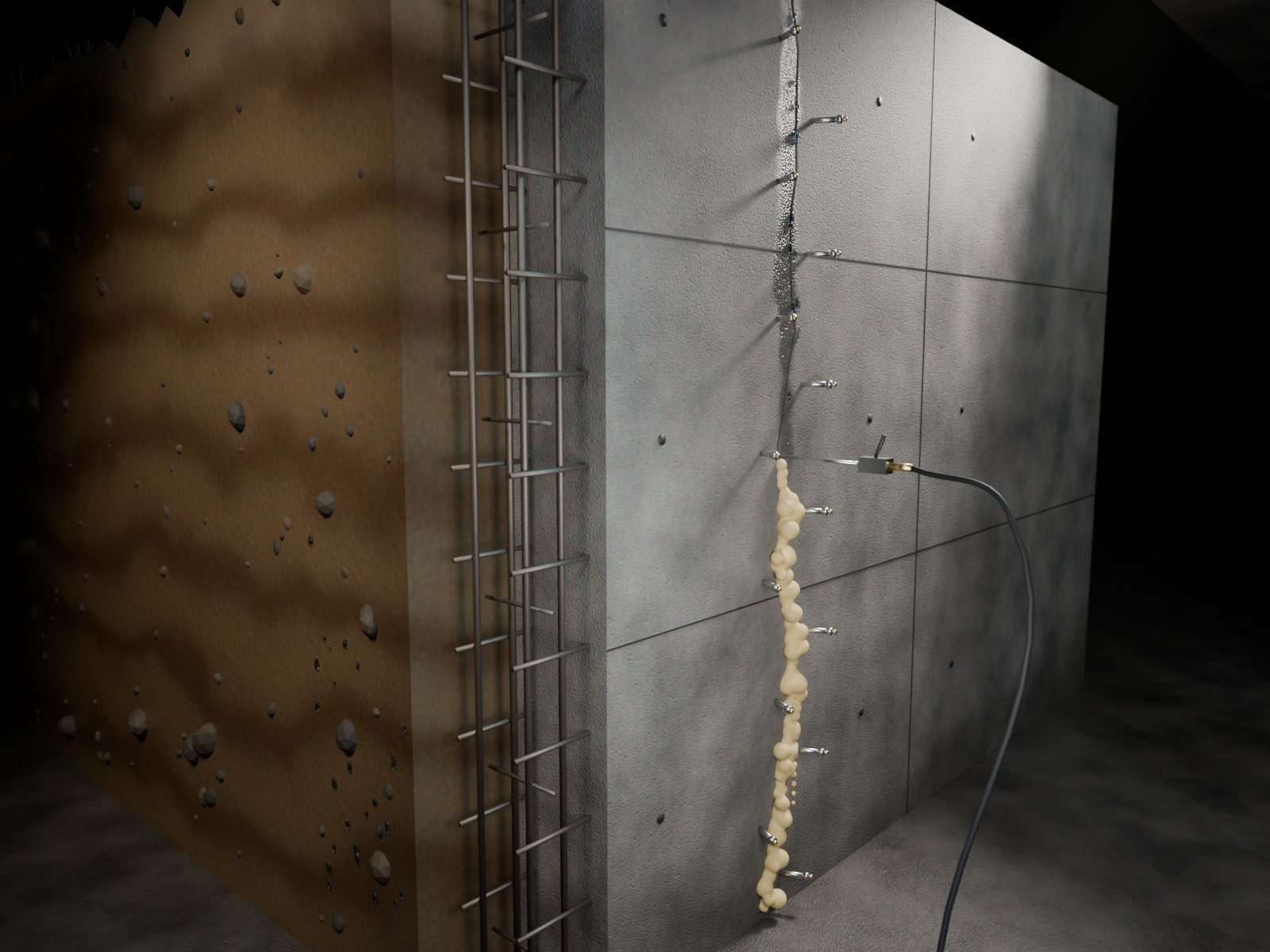 Wall against soil · crack sealed with polyurethane
When is injection worth assessing?
When water comes in at a specific point or line. If the leak is widespread, the whole waterproofing probably needs review.
Wet cracks
Cracks in concrete walls or slabs that drip, run or leave stains after rain.
Construction joints
The joint between two concrete pours is one of the most common water paths.
Walls against soil
Basements, storage rooms and car parks where water pushes in from outside.
Penetrations and special points
Ducts, pipes and anchors that pass through concrete and leave a path around them.
A controlled repair, not a blind application
- 1
Diagnosis
Where the water comes in, at what pressure, and the condition of the concrete.
- 2
Drilling pattern
Position and angle of each hole to cross the crack, alternating sides.
- 3
Injection
In stages, reading how the material responds to decide when to continue or stop.
- 4
Finishing
Packer removal, sealing of the holes and surface cleaning.
A real injection job, start to finish
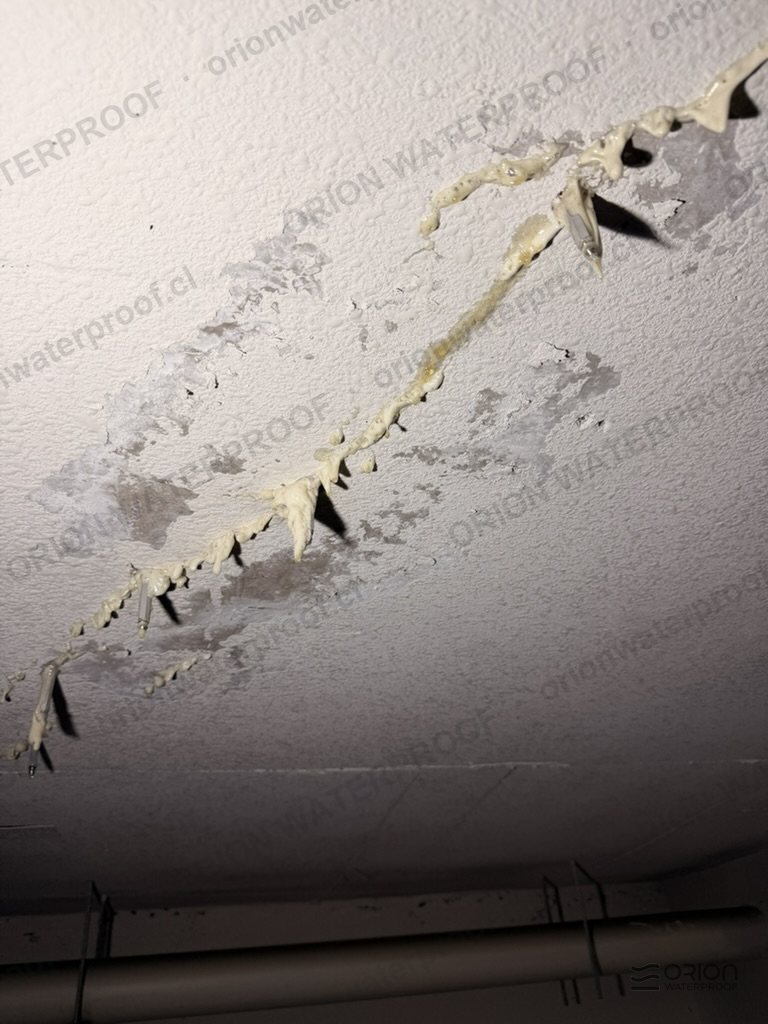
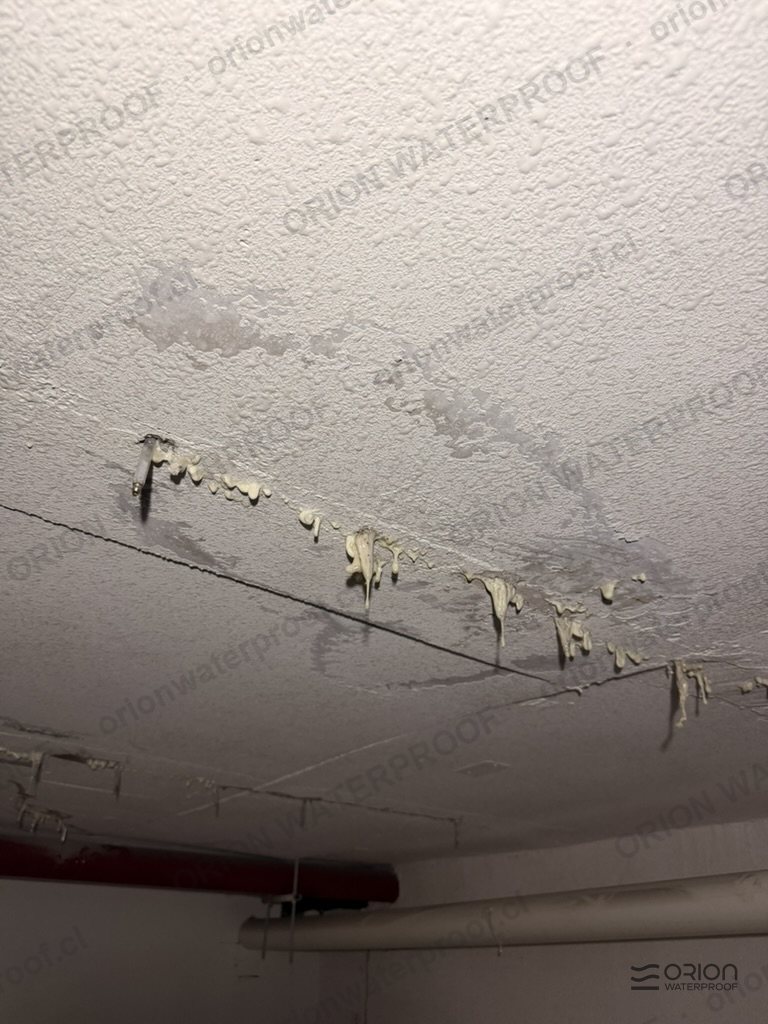
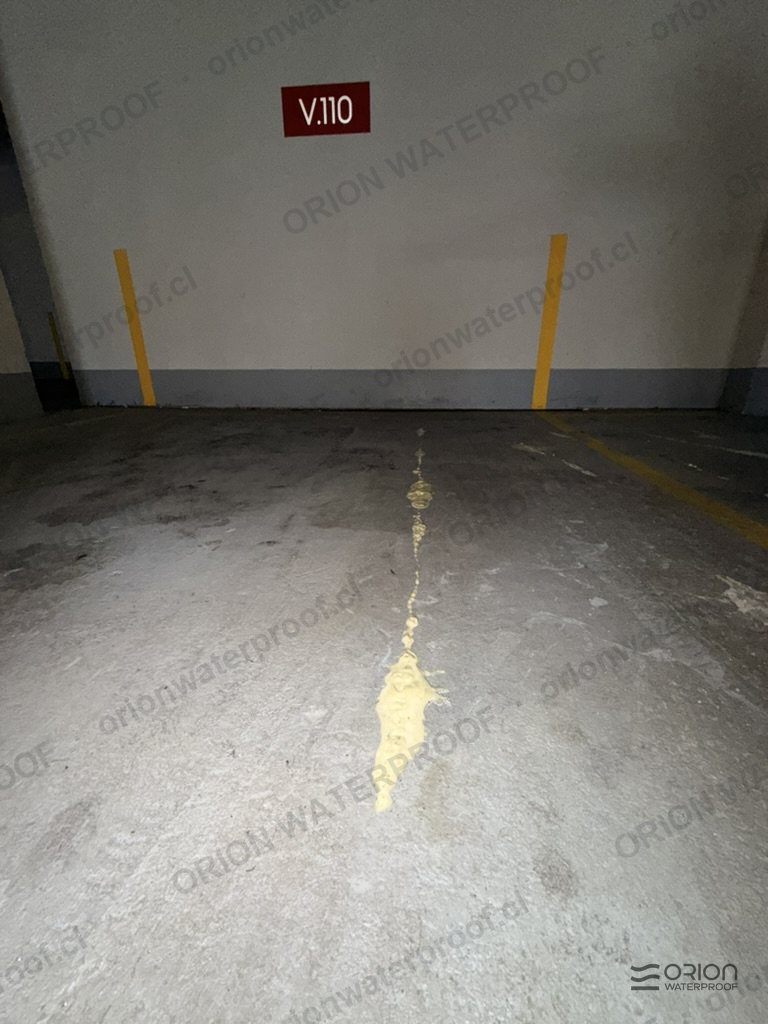
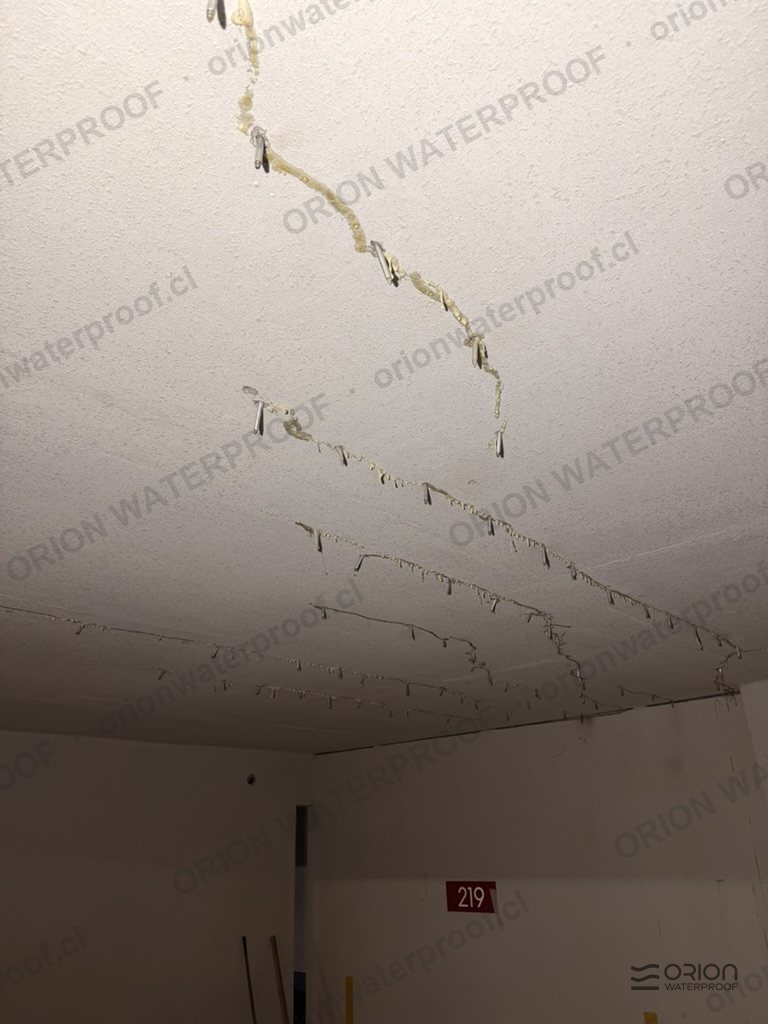
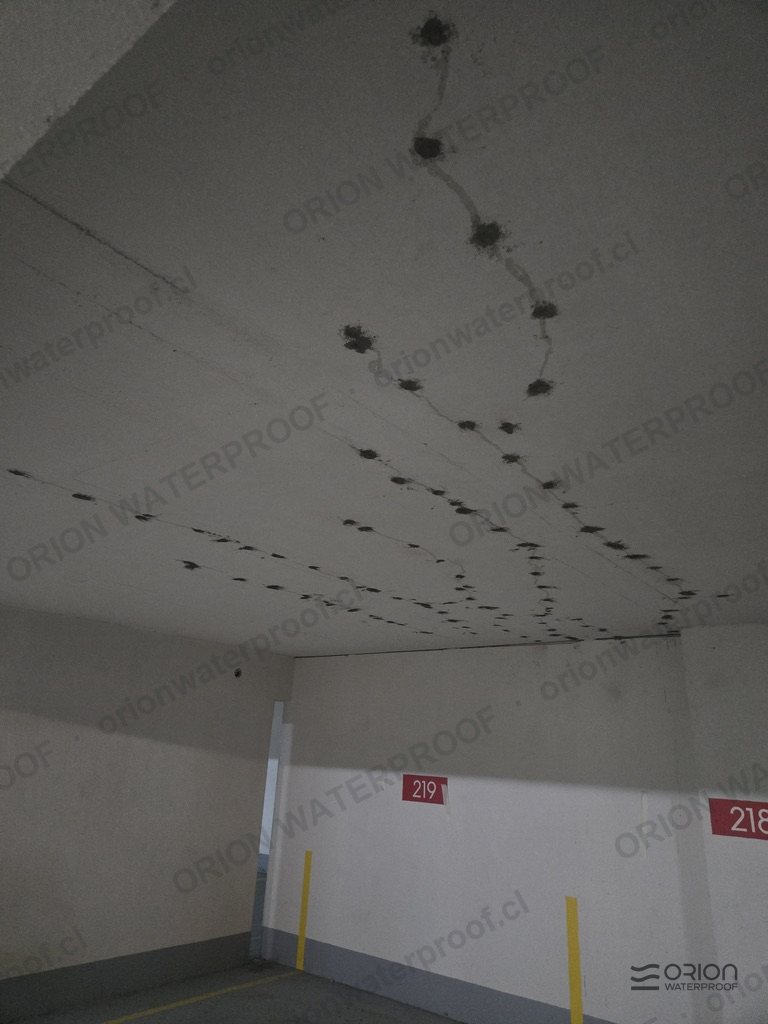
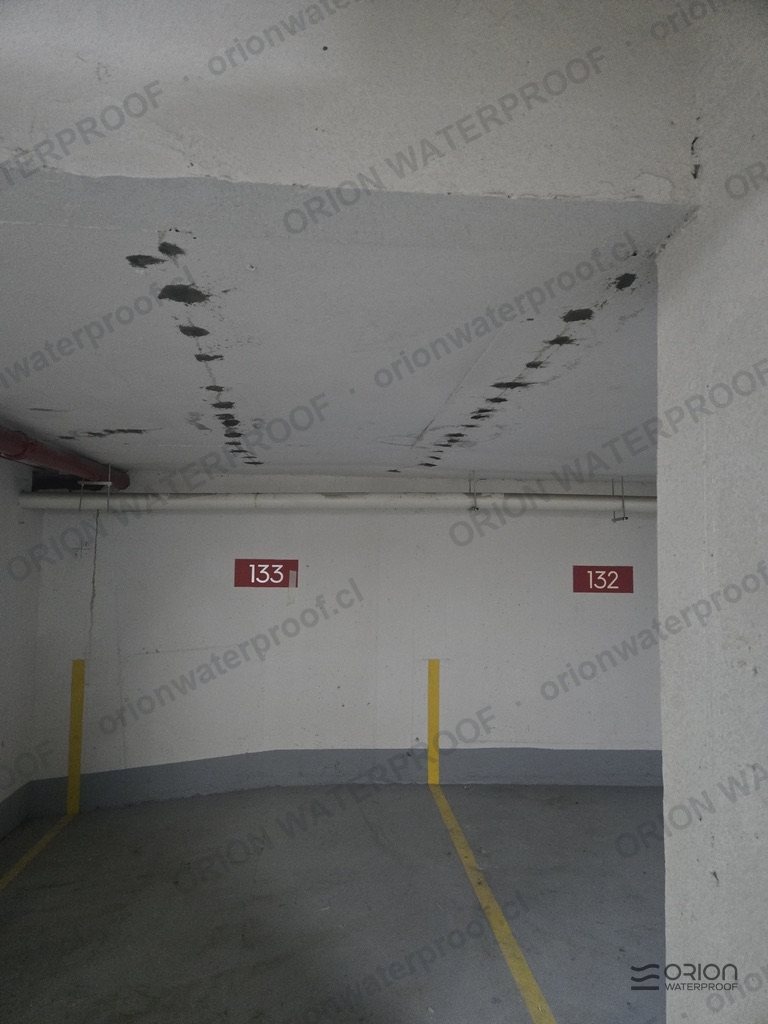
Car park slabs with cracks leaking from the level above. We injected in stages until the resin crossed the full slab thickness.
Before deciding on injection
Can you inject while the leak is active and water is flowing?
Yes. Polyurethane injection resins react with water: in a wet crack they form the foam that seals it. What changes with the flow rate is the resin and the injection pace.
What is the difference between a hydrophobic and a hydrophilic resin?
Hydrophobic resin reacts with water and forms a foam that, once cured, does not absorb water; it is typically used to stop leaks with running water. Hydrophilic resin absorbs water and forms a flexible gel or foam that swells with moisture and can shrink if the element dries, so it is used where it stays wet. The choice depends on how much water comes in, whether the crack moves and whether the wall stays dry or wet.
Is chipping or demolition needed?
No. Small holes are drilled along the crack or joint; afterwards the packers are removed and the holes sealed with mortar.
Does injection replace waterproofing?
No. It seals a specific water path. If water appears at many points or across a whole slab, assess the complete waterproofing before injecting point by point.
How is it priced?
It depends on the metres of crack or joint, the number of holes, access and flow rate. We quote after seeing the leak, in photos or on site.
Tell us where the leak is
The more we know, the better our first answer. If you have photos or videos, send them on WhatsApp or reply to the confirmation email.